
Prime Commercial Land at Carmel Church I-95 Exit Caroline County VA
Belmont Commercial $6,999,500.
Explore a premier 22-acre commercial land offering in Ruther Glen, VA, perfectly zoned for your business success.
Exceptional Location & Visibility
Belmont Commercial Property
Property Highlights
Situated in a thriving community, this property offers unparalleled potential for investors and developers.
Zoned B1 Commercial
21.94 Acres Available
Utilities On-Site
Highway Frontage
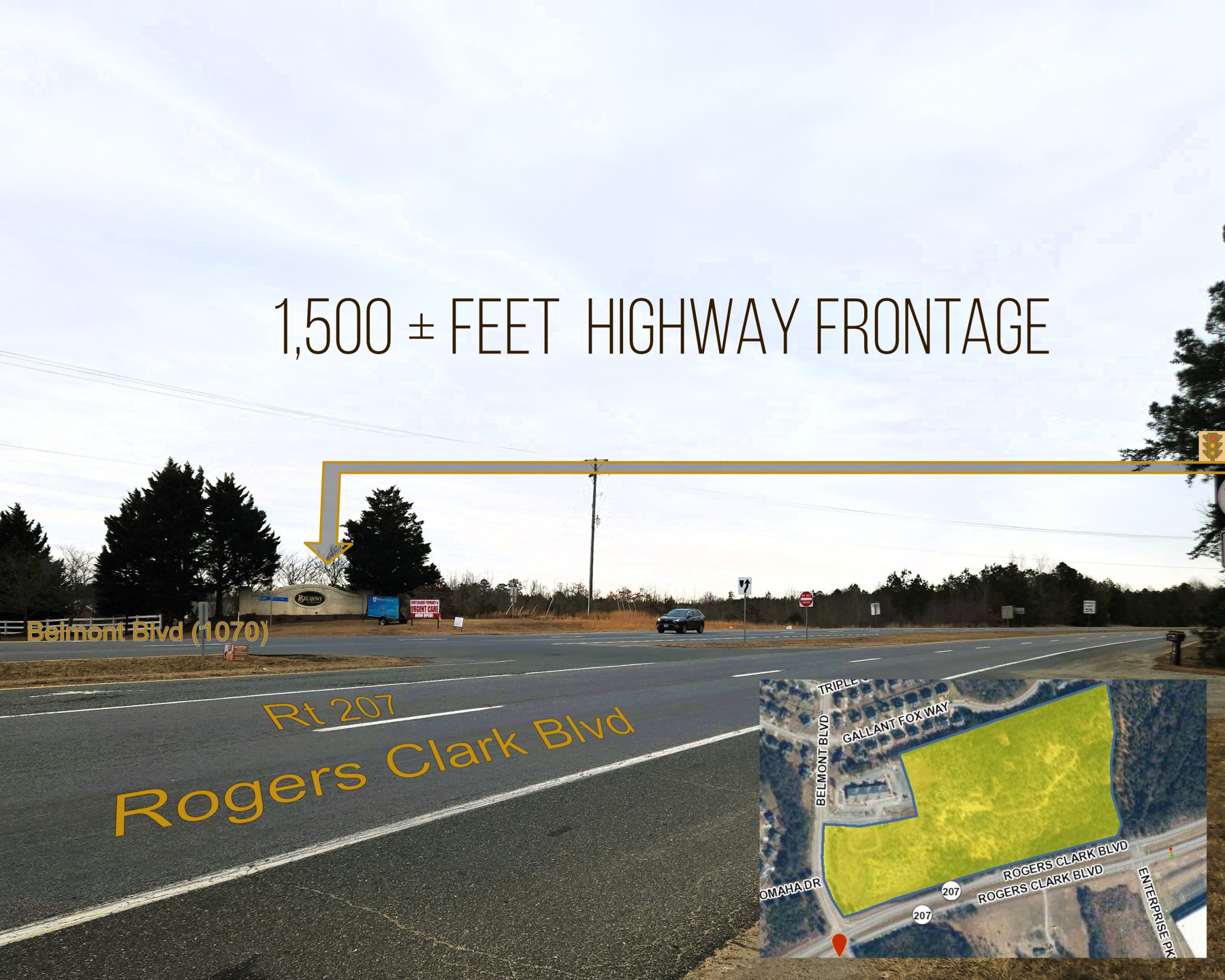
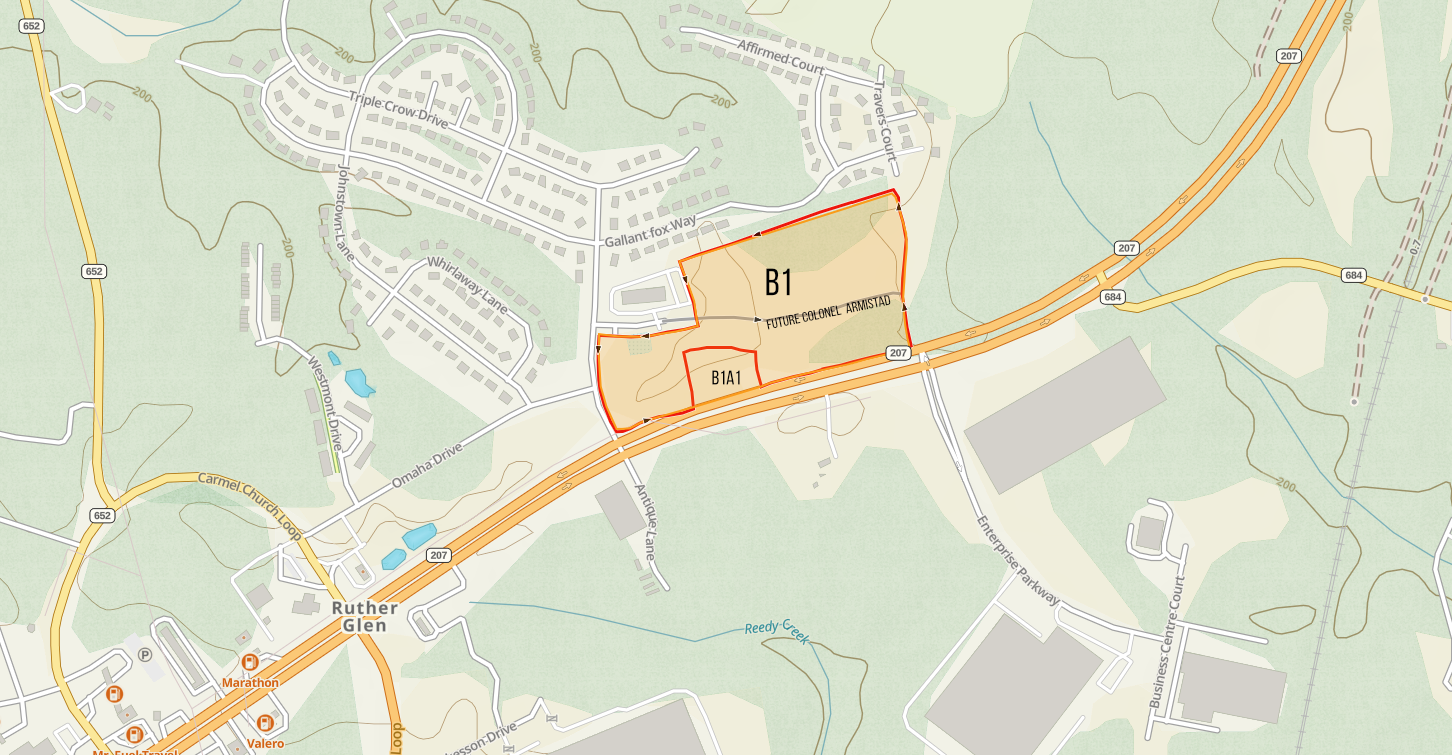
Boasting 1,450 feet of frontage on State Highway 207, this property offers unmatched visibility and accessibility.
Proximity to Developments
Located near an existing professional office building and urgent care facility, providing synergy for retail or medical uses.
Infrastructure Expansion
Future expansion plans include the extension of Colonel Armistad Drive and a connection to Travers Way, enhancing connectivity.
Zoning and Utilities
Zoned B-1 Commercial with utilities ready at the site, ensuring a smooth development process.
Strategically Located Commercial Land
Positioned in the heart of Caroline County, Virginia, this 22-acre commercial land offers an unparalleled investment opportunity. With its B-1 zoning, the property is primed for retail or medical developments, benefiting from its proximity to high-traffic State Highway 207. The location’s visibility and accessibility make it an ideal choice for investors looking to capitalize on the area’s growth. The surrounding infrastructure, including an urgent care facility and professional office building, enhances the site’s appeal, ensuring a steady flow of potential customers and clients. As the community expands, this property stands as a cornerstone for future commercial success.
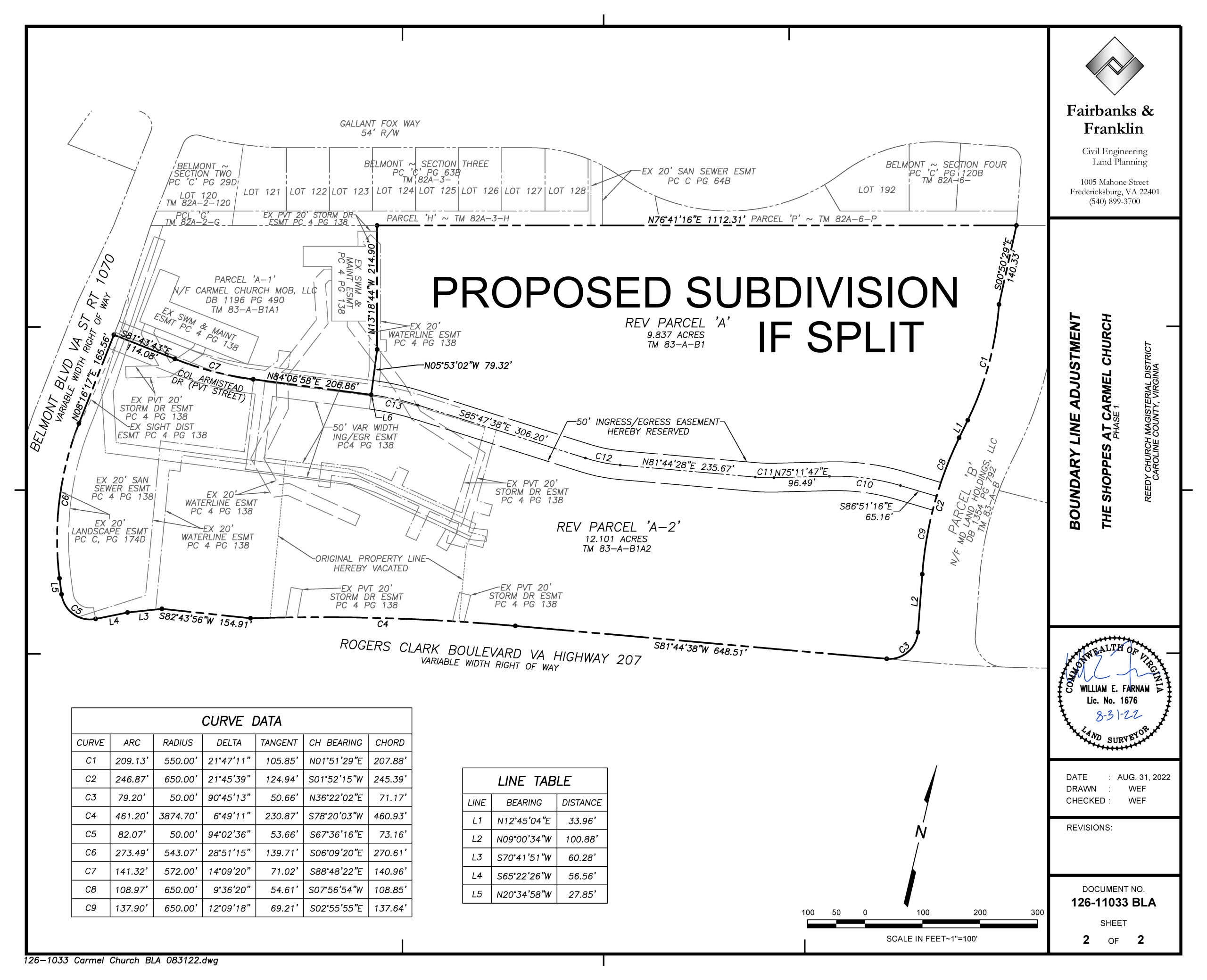
126-1033 Carmel Church_PROPOSED BLA
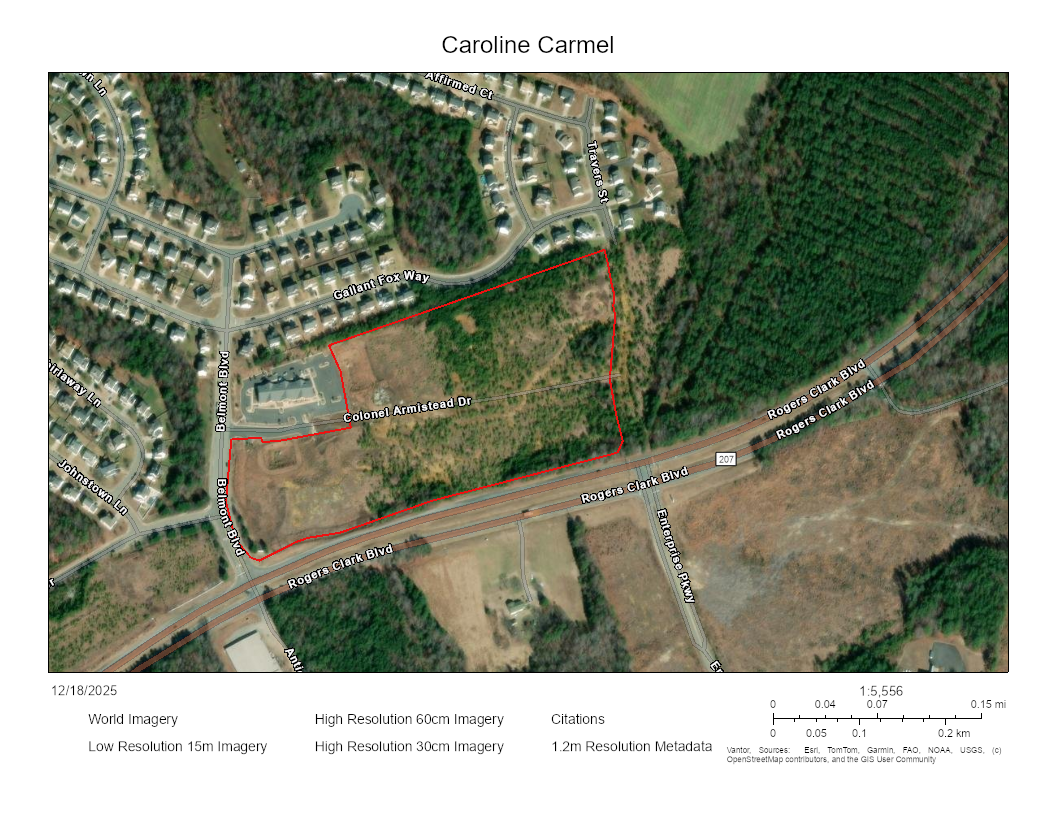
Belmont Hybrid Map
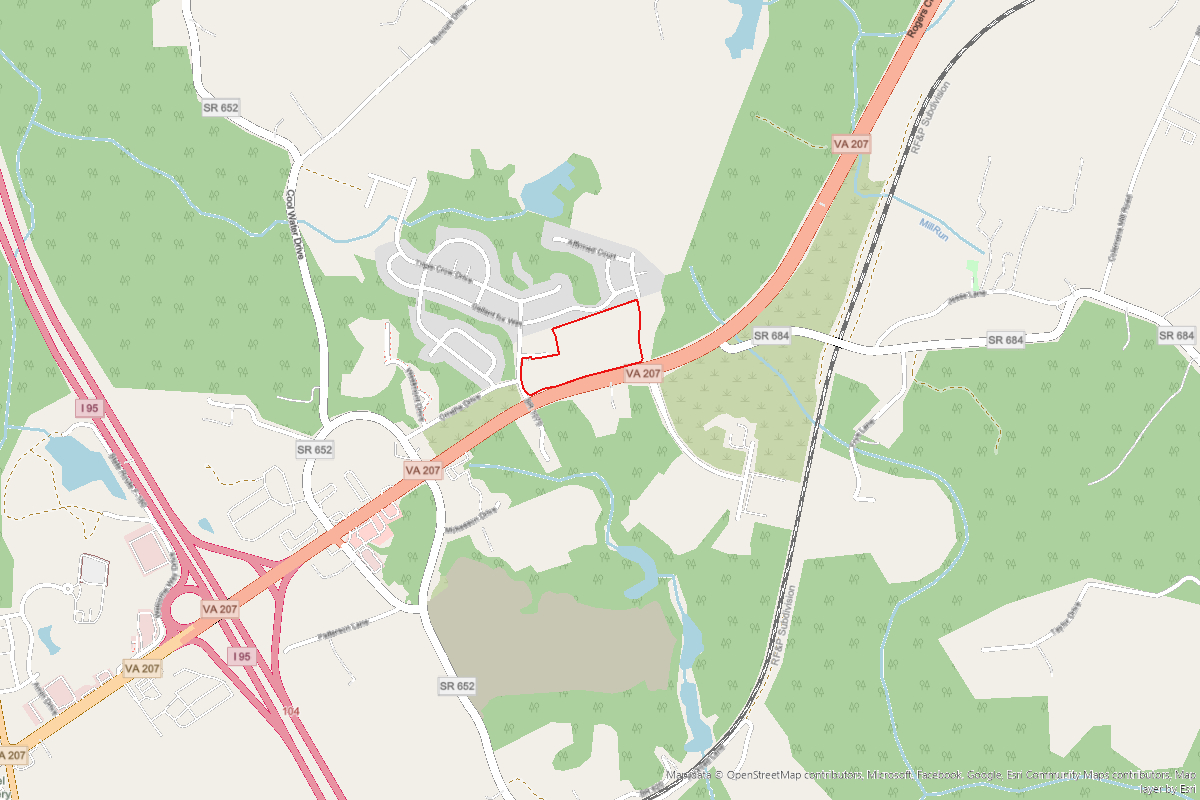
Belmont Open StreetMap
CarmelChurch Belmont
1,500 ft frontage
Belmont Parcel
Signal at Enterprise (Travers)
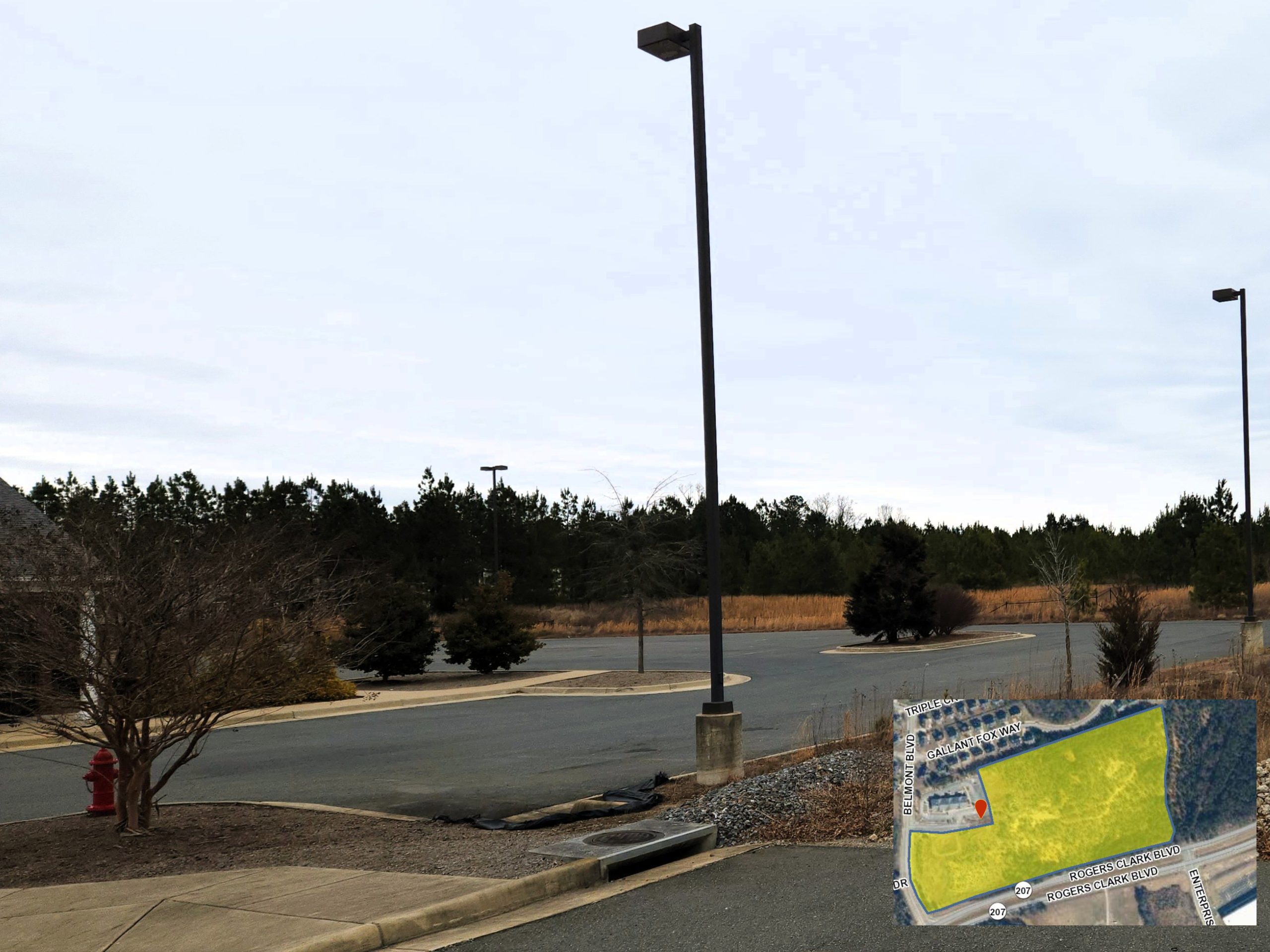
At Colonel Armistad

Colonel Armistad 2
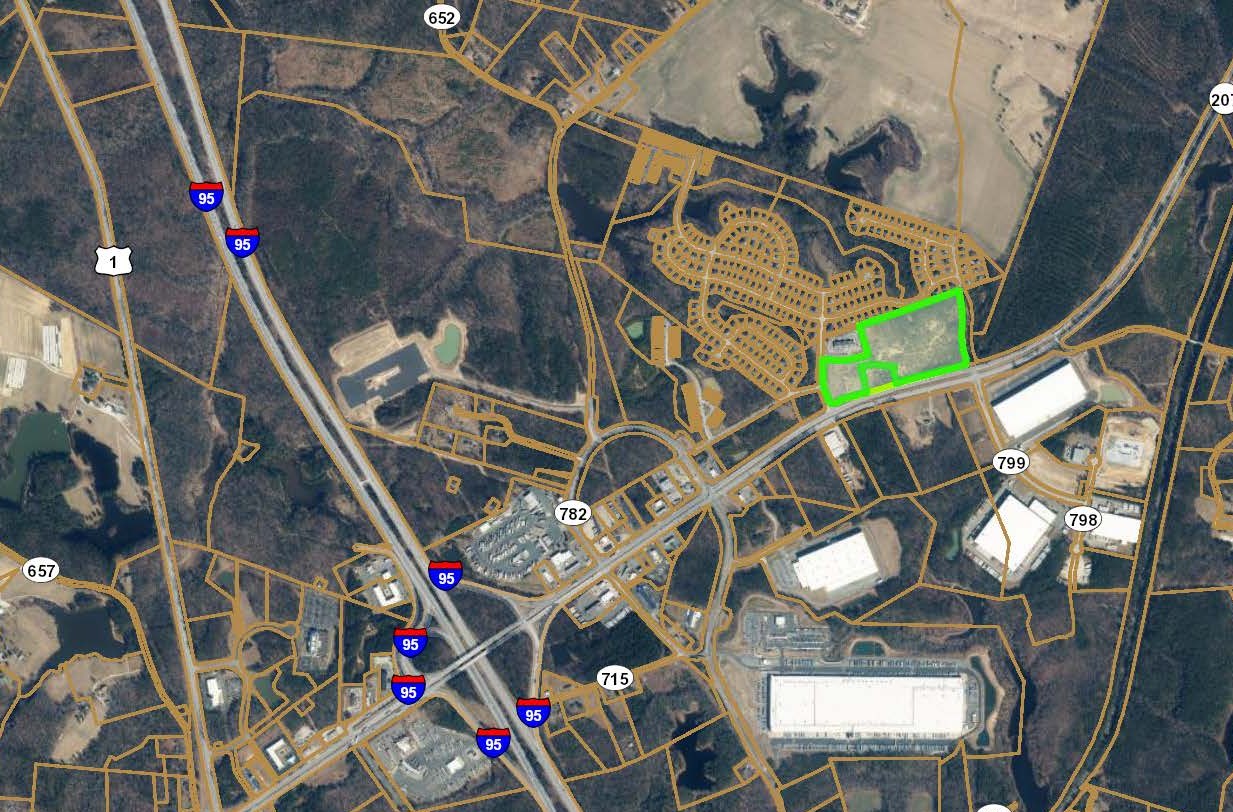
Belmont Crossing GIS Aerial resize
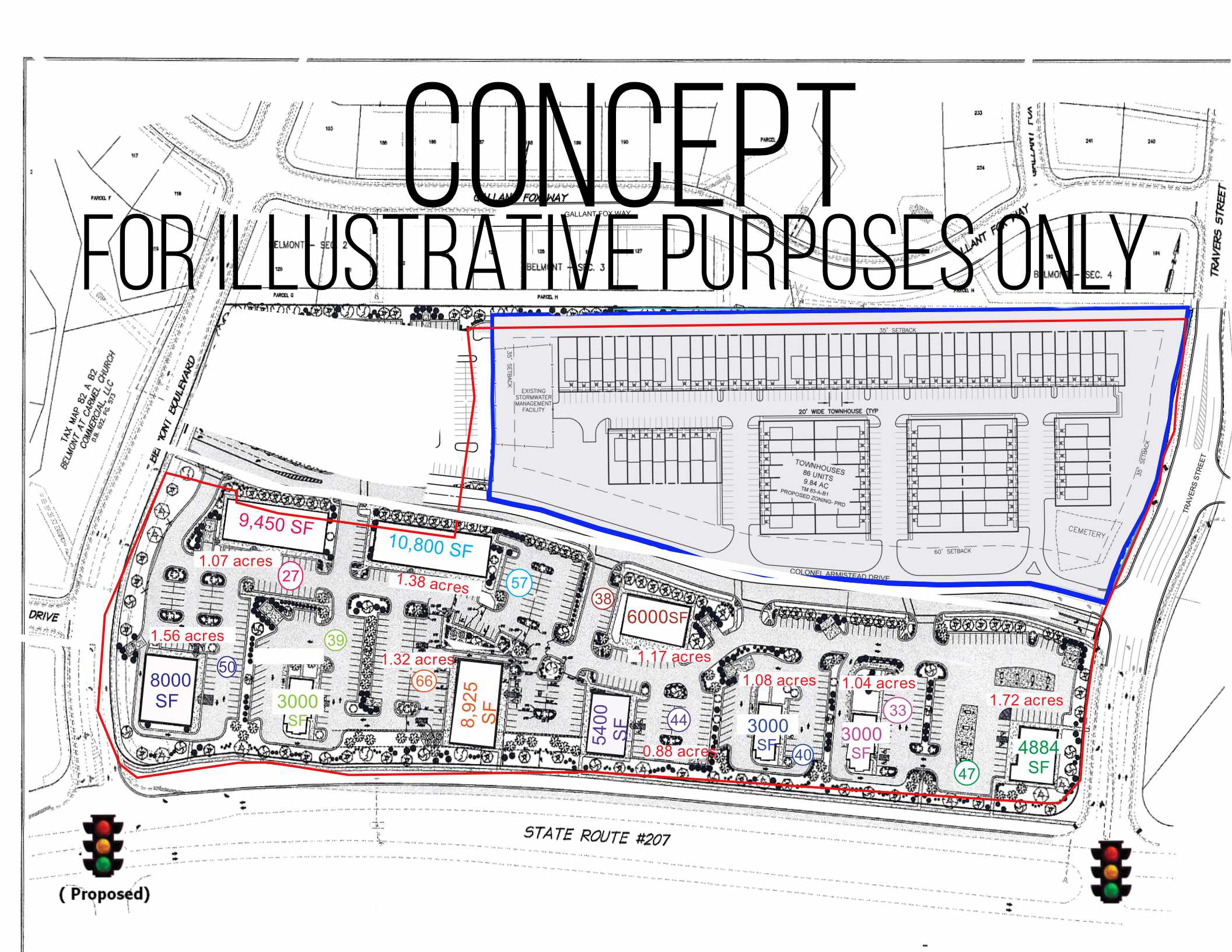
Carmel Church Grocery Site Pl…
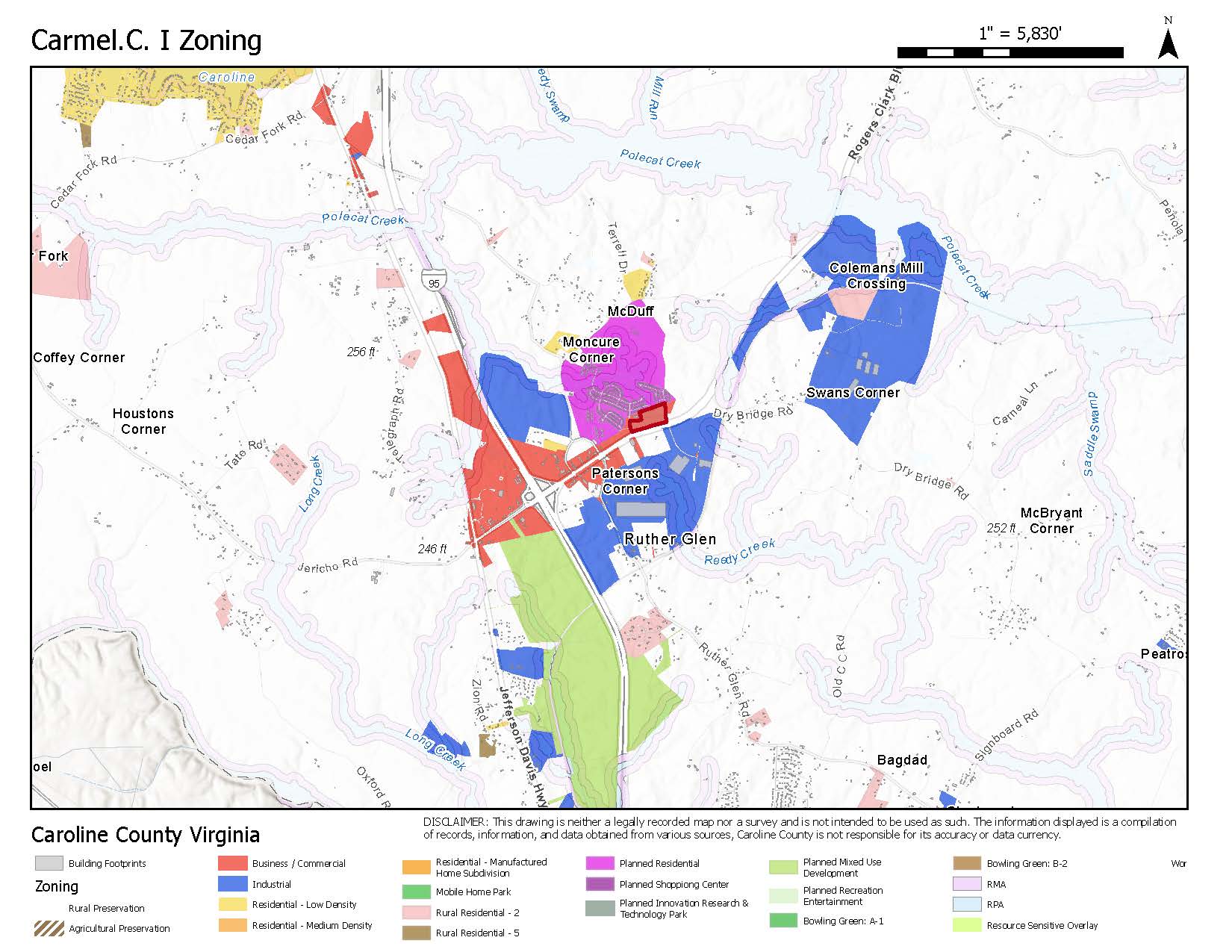
Crml Chrch Invst ZONING
ZONING USES
Permitted By Right:
- Retail & Food: Restaurants, Bakeries, Food Stores, Clothing & Tailors, Florists, Antiques, Gift Shops, and general Retail.
- Professional & Medical: Banks, Medical Offices/Clinics, Office Buildings, Libraries, and Educational Uses.
- Services: Barber & Beauty Shops, Dry Cleaners/Laundries, Shoe Repair, Printing & Publishing, Funeral Homes, and Seasonal Events.
- Automotive & Trade: New Car/Bicycle/Appliance Sales, Service Stations (major repair under cover), Machinery Sales, and covered Plumbing/Electrical/Lumber supplies.
- Hospitality & Community: Hotels, Motels, Churches, Clubs/Lodges, and Public Utilities.
- Modern & Specialized: Limited Breweries & Distilleries, Exercise Studios, Indoor Kennels, and EV Charging Stations/Centers.
Allowed by Special Exception:
- Industrial & Trade: Light Warehousing, Distribution, Assembly, Wholesaling, and Contractor Equipment Storage/Sales.
- Entertainment: Theaters, Bowling Alleys, Billiard Parlors, Dance Halls, and Public Swimming Pools.
- Care & Housing: Child Care Facilities, Hospitals, Training Centers, Bed & Breakfasts, and Accessory Residences.
- Specialized Services: Truck Stops/Repair (with buffering), Cabinet/Furniture/Upholstery Shops, and Public Utilities.>
LOT & DIMEDIMENSION
ARTICLE XII – LOT AREA & OTHER DIMENSIONAL REQUIREMENTS WITHIN DISTRICTS (CONDENSED /EDITED)
Section 1
District: B1
Min. Lot Area (Sq. Ft.): NONE
Min. Lot Width (Feet):NONE
Setback: 40’
One-Side: 15’(d)
Two-Sides: 30’(d)
Rear: 35 (g)
Max. Height Of Buildings (Feet): 40’
Max. Density Per Gross Acre: NA
Economic Growth Area
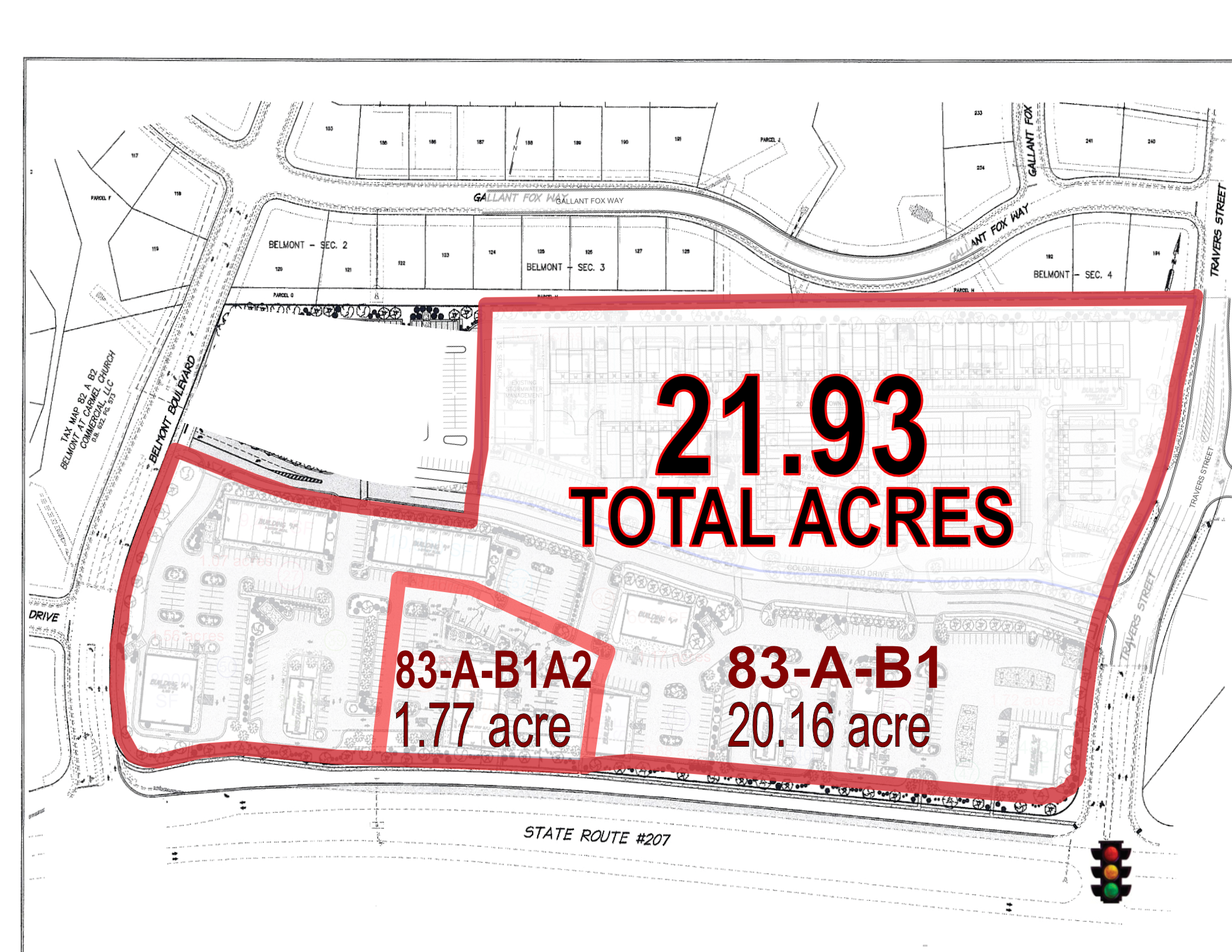
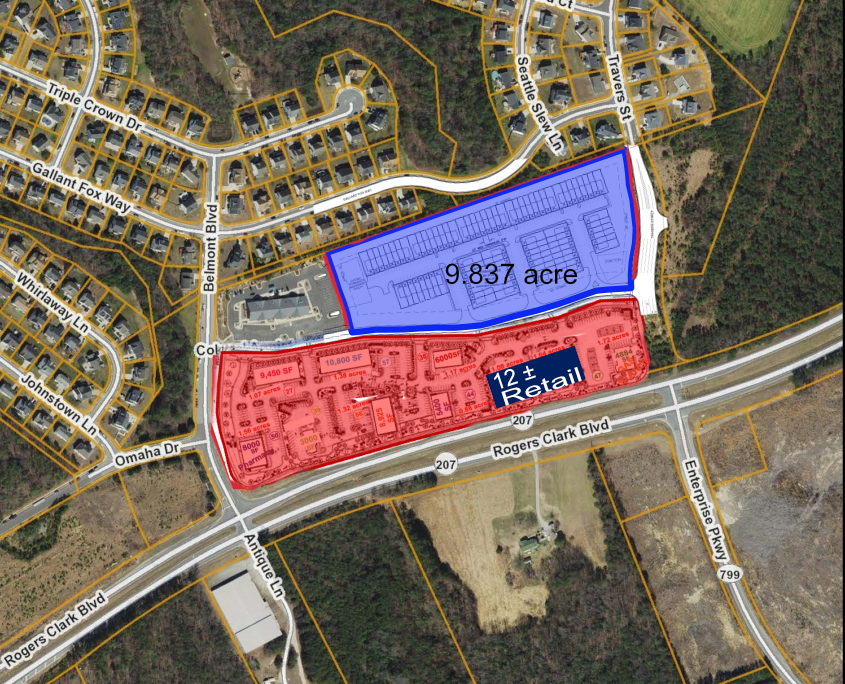
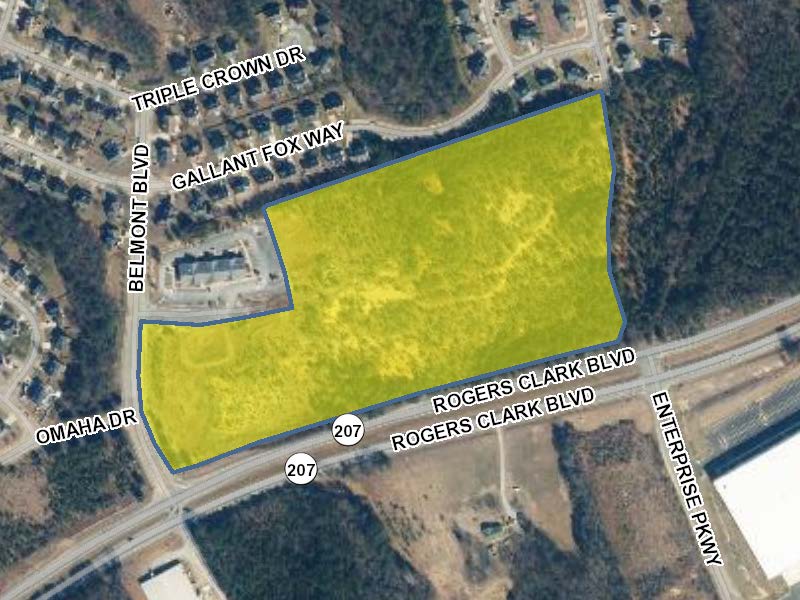
Prime Location: The Shoppes at Carmel Church are Strategically positioned at the high-traffic intersection of Rodgers Clark Blvd (Rt. 207) and Belmont Road. These two parcels (20.16 acres and 1.77 acres) anchor a key gateway within the Carmel Church Growth Area
- Unrivaled Interstate Connectivity: Located less than one mile from I-95 (Interchange 104), this site serves as a vital hub for regional commerce and interstate freight. It offers seamless access to the Richmond-to-D.C. corridor, positioning your business within a 35-mile radius of nearly 1,000,000 potential shoppers and employees.
- Rapidly Growing Economic Hub: The immediate area is a magnet for major industry leaders, including the World Class Distribution 1.2M sq. ft. facility (the county’s largest employer) and the expanding Modular Mission Critical™ campus. The site’s legal designation as part of a planned phase development underscores its readiness for high-density commercial use.
- Infrastructure & Investment Ready: Advanced Connectivity: Benefit from fiber redundancy and a robust communications infrastructure essential for modern retail or technology-based operations.
- Growth Momentum: Adjacent to new residential developments like the Belmont community, ensuring a steady stream of local commuter traffic and pedestrian activity.
- Economic Incentives: As part of Virginia’s first county-wide Technology Zone, qualified businesses may be eligible for aggressive tax rebates and performance-based grants. Caroline County also offers some of the lowest property taxes along the I-95 corridor ($0.52 per $100).
This is a premier opportunity to secure a large property in a location the Carmel Church Community Plan identifies as the county’s primary engine for economic vitality.
For further details on available business incentives and regional demographics, visit the Caroline County Economic Development portal.
LOT AREA & OTHER DIMENSIONAL
PARKING REQUIREMENTS
(As Amended through 02/18/2025)
Section 1 – Off-Street Parking Requirements
There shall be provided at the time of erection of any main building or at the time any main building is enlarged minimum off-street parking space with adequate provision for entrance and exit by standard sized automobiles.
Off-street parking requirements are as follows:
Single and two-family residences – two (2) spaces per unit.
- Apartments, condominiums, or other multi-family dwellings – two (2) spaces per unit.
- Townhouse dwellings – two (2) spaces per unit.
- Churches – one (1) space per five (5) seats in main assembly area.
- Hospitals, nursing homes, convalescent homes, or similar uses – one (1) space per two (2) beds capacity.
- Hotels, motels, tourist homes, or other commercial lodging facilities – one (1) space per rental unit.
- Community buildings, clubs, lodges, museums, libraries, or similar uses – four (4) spaces per 1,000 square feet of floor area.
- Auditoriums, theaters, stadiums, or similar places of public assembly – one (1) space per four (4) seats.
- Eating and drinking establishments – one (1) space per four (4) seats; drive-in restaurants – one (1) space per seventy-five (75) square feet of floor area. Notwithstanding the above, eating and drinking establishments and drive-in restaurants shall each have a minimum of ten (10) spaces.
- Automobile service stations – one (1) space per gasoline pump.
- Professional offices, personal service shops, insurance and real estate offices, financial institutions or medical or dental clinics – one (1) space per two hundred (200) square feet of floor area, with a minimum of five (5) spaces.
- Animal hospitals – one (1) space per four hundred (400) square feet of floor area, with a minimum of four (4) spaces.
- Retail stores – one (1) space per two hundred (200) square feet of floor area, with a minimum of five (5) spaces; retail food stores over four thousand (4,000) square feet – one (1) space per one hundred (100) square feet of floor area.
- Shopping Center – One (1) space per two hundred fifty (250) square feet of floor area for retail development within a shopping center. (Amended 11/24/15)
- Amusement places, dance halls, skating rinks, swimming pools, or exhibition halls – one (1) space per 100 square feet of floor area.
- Funeral homes and liquor stores – one (1) space per 100 square feet of floor area, with a minimum of thirty (30) spaces.
- Furniture, large machinery, equipment, automobile, or boat sales stores – three (3) spaces per 1,000 square feet of floor area.
- Manufacturing or wholesale distribution facilities – one (1) space per two employees. The number of employees shall be based on the maximum number of persons the establishment is designed to accommodate on a single work shift.
- Elementary or middle schools – one (1) space per twenty-five (25) classroom seats.
- High schools or colleges – one (1) space per five (5) classroom seats.
- Day schools or nursery schools – two (2) spaces for each classroom.
Section 2 – Off-Street Loading Requirements
Uses which involve the receipt or distribution by vehicles of materials or merchandise shall provide and maintain adequate off-street space for standing, loading and unloading purposes. This space shall be in addition to that required for off-street parking. The location of the loading area shall not interfere with the movement of vehicles within the prescribed parking areas. Each off-street loading space shall be a minimum of twelve (12) feet in width and of sufficient depth to accommodate the largest vehicles servicing the establishment, but said length shall not be less than 25 feet. Loading space shall be required as follows:
- Commercial uses – one (1) space per 7,500 square feet of floor area, not to exceed a total of five (5) spaces.
General Parking Standards
Section 3 – General Parking Standards (amended 02/18/2025)
Parking space requirement for a use not specifically listed above shall be the same as for a listed use of similar characteristics of parking demand generation. Where fractional spaces result, the parking spaces required shall be rounded up or down to the next closest whole number.
Parking spaces shall be located on the same lot with the main building, except where the applicable zoning district regulations permit off-site parking spaces. Every parcel of land hereafter used as a public parking area shall be surfaced with asphalt, porous pavers or concrete. Appropriate curbing or barriers shall be provided as determined by the Administrator. Any lights used to illuminate parking areas shall be source shielded and directed downward and arranged so as to reflect the light away from adjoining properties and public rights-of-way.
Parking lot lighting on properties not subject to occupancy at night shall be reduced to the minimum levels necessary to provide security lighting for the property. The height of lighting fixtures shall not exceed the height of the principal structure or thirty-five feet, whichever is less.
If more than one type of permitted use occupies a single structure or parcel, the total parking requirements shall be the sum of the requirements for each of the permitted uses unless shared parking or a reduction in parking is allowed under the provisions of this Ordinance.
When computing parking spaces based on gross floor area, areas within the footprint of a building which are used solely for parking spaces and associated driveways, or areas within a structure not normally occupied during business hours (eg; supply/storage rooms, rest rooms, etc) are not included as part of the floor area calculation used for determining required parking.
Grid and modular pavers or pervious pavement shall be used for any required parking area, alley, or other low traffic driveway, in excess of the requirements of this section as approved by the Director.
Driveways and drive aisles without parking spaces shall be a minimum of twenty-two (22) feet in width.
Parking spaces and drive aisles shall comply with the following requirements. The terms below shall be interpreted or defined as follows:
Alley: A public or private right-of-way primarily designed to afford access to the side or rear of properties whose principal frontage is on a street. An alley shall be a minimum of 20 feet in width.
Drive Aisle: A circulation route for vehicular traffic through a parking lot, site, or property, and may connect to a driveway.
(a) Parallel parking spaces shall comply with the following dimensions below:
Direction of Parking Stall Width (feet) Stall Depth (feet) Aisle Width (feet)
One-way aisle (one-sided parking) 8.5 22 18
One-way aisle (two-sided parking) 8.5 22 18
Two-way aisle (two-sided parking) 8.5 22 20
(b) Standard parking spaces shall comply with the following dimensions below:
Parking Angle
Stall Width (feet) Stall Depth Perpendicular to Aisle
(feet) One-Way Aisle Width
(feet)*
Two-Way Aisle Width (feet)*
45° 9 19 18 18
60° 9 20 18 19
90° 9 18 24 26
*Where required, fire lanes shall have a minimum width of 20’.
Section 4 – Reduction in Off-Street Parking
In lieu of the numerical parking or loading space standards contained in this article, applicants may have a site and/or use specific parking and/loading space analysis and plan prepared by a professional qualified to perform such studies, for submission to the county for consideration. The professional qualifications of the preparer shall accompany the analysis.
- Such analysis and plan shall be based on parking/loading demands at comparable uses or establishments taken within twelve (12) months of the date of submission and shall include comparisons with the Institute of Transportation Engineers (ITE) Parking Generation report (3rd Edition, 2004, or as it may be amended from time to time).
- The parking analysis may also propose, and the zoning administrator may approve, the construction of a portion of the required parking for a site in an “overflow” or “peak demand” lot. Such lots shall be designed with grid paving systems that allow grass to grow within the paver voids, pourous pavement or other similar materials to reduce stormwater runoff and promote on-site absorption of runoff. Curbing and wheel stops may be eliminated from this portion of the parking lot.
- If approved by the zoning administrator, the site-specific parking or loading plan shall guide the development for the site, provided that, if the plan provides for fewer parking or loading spaces than would otherwise be required, an area sufficient to accommodate one-half of the difference shall be reserved for a period of five years and maintained as landscaped open space during that time. A reserved area shall not be required where the site and use-specific parking analysis and plan refers to a use for which a specific or comparable listing is not provided in this article.
Section 5 – Shared Parking
Shared parking may be considered for land uses with different parking demand patterns for which it can be demonstrated that the different uses can use the same parking spaces/areas throughout the day. Shared parking strategies will result in fewer total parking spaces needed when compared to the total number of spaces needed for each land use or business separately. Examples of land uses for which shared parking maybe appropriate include office, restaurants, retail, colleges, churches, and theaters.
- Applicants for new development or significant redevelopment shall examine the feasibility of utilizing shared parking arrangements . Significant redevelopment is any development that increases building size or land uses so that the site’s trip generation and/or parking demand increases by more than 10 percent or more than 10 spaces greater than the minimum number of parking spaces required by this article, whichever is greater.
- Applicants may have shared parking analysis and plan prepared by a professional qualified to perform such studies, for submission to the county for consideration. The professional qualifications of the preparer shall accompany the analysis
NAVIGATE THE LAND:
These links are to a phone/web hiking and hunting GPS Navigation app called GaiaGPS. The “Waypoint” markers are positioned on the various lot lines.
BE SURE TO DOWNLOAD THE GAIA GPS APP FROM APPSTORE OR PLAYSTORE
If you are traveling to a remote property please be sure to download the map to your phone before you go, so it will work as satellite gps without internet.
Explore Our Competitive Pricing Options
Parcel Pricing Breakdown
Discover the value of investing in prime commercial land with our detailed pricing options.
$6,999,500
Our pricing structure offers flexibility and transparency, ensuring you get the best value for your investment. Choose from our available parcels, each priced competitively to meet your business needs.